
The Organizational Operating System
The architecture that connects people, AI and organizational action.
Strategy, knowledge, authority, decisions and work cannot remain separate systems.
The Organizational Operating System provides the shared organizational infrastructure through which they operate as one.
It is the foundation that enables the Operating Loop to run continuously and reliably.
What this means
- 01
One organization, one system
Shared infrastructure replaces silos and disconnected tools.
- 02
Consistency at scale
Common ways of working across teams, functions and geographies.
- 03
Governed and trustworthy
Built-in governance, security and privacy from day one.
- 04
Adaptive and future-ready
Designed to evolve with your strategy, people and technology.
From intent to improvement
Organizational Intelligence is created in the loop. The Operating System makes the loop possible.
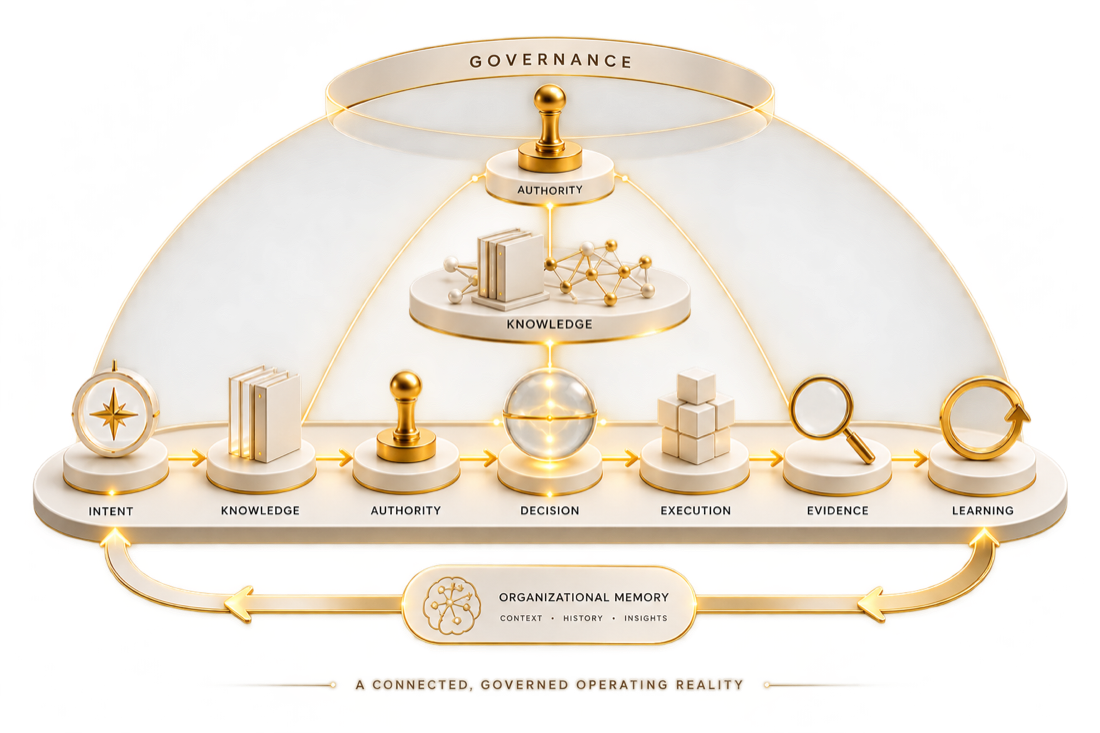
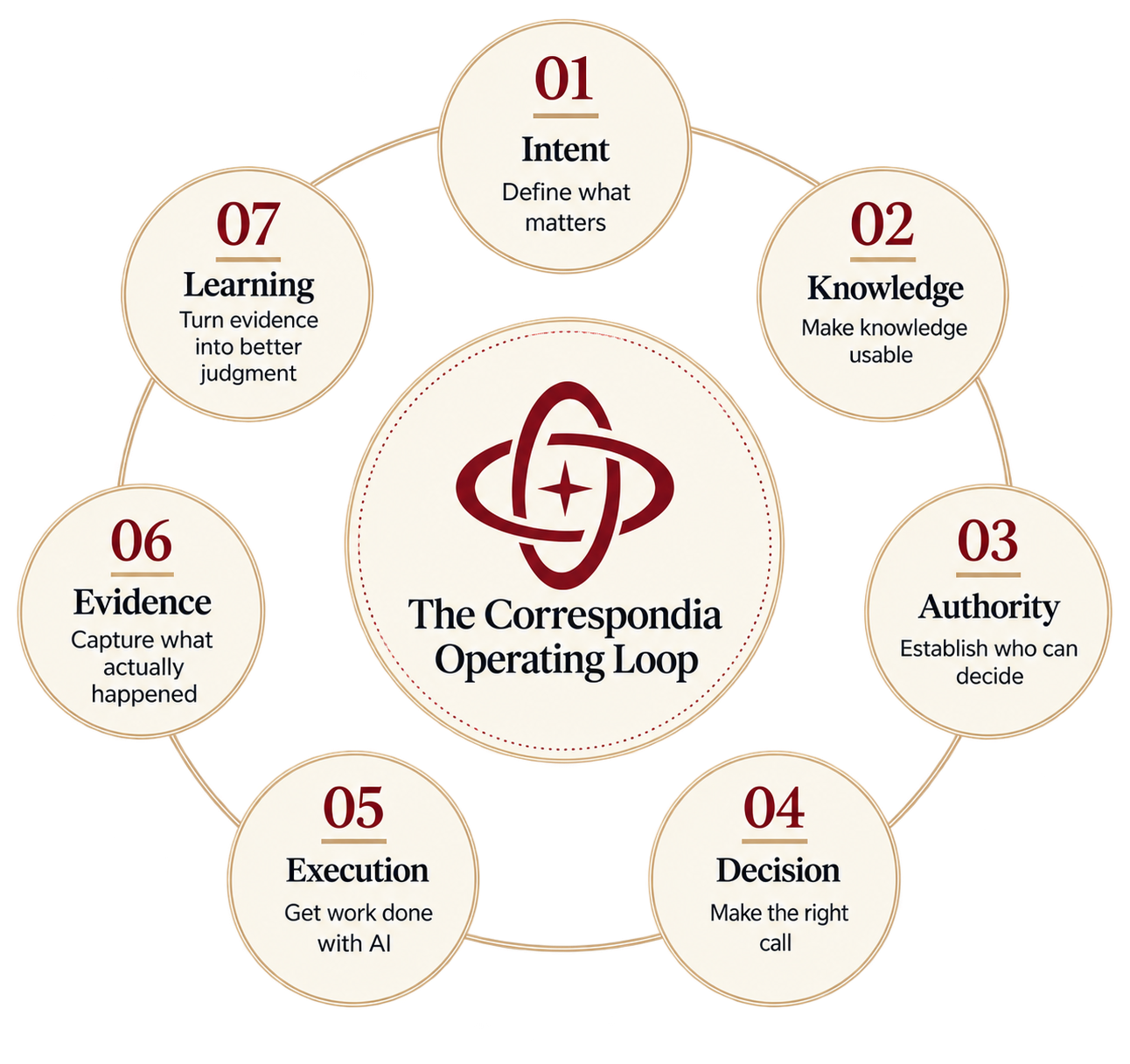
The Operating Loop is the dynamic mechanism running through a broader architecture of people, AI, systems, data, governance, work, evidence and learning.
Operating architecture
- 01
Intent & Context
Clarify purpose, goals and priorities in context. Direction everyone can align with.
- 02
Knowledge & Memory
Capture, organize and connect what the organization knows. Findable, reusable and up to date.
- 03
Authority & Governance
Define who can decide, approve and commit resources. Clear, legitimate and accountable.
- 04
Decision Infrastructure
Provide decision rights, methods and support. Better decisions, faster.
- 05
Work & Execution
Plan, coordinate and execute with discipline. Aligned action that delivers.
- 06
Evidence & Outcomes
Collect signals, measure results and ensure traceability. Truth about what actually happened.
- 07
Learning & Adaptation
Turn evidence into insight and improve what matters. Smarter intent, stronger results.
What the Operating System connects
- 01
People
Human judgment, creativity and accountability.
- 02
AI
Intelligence, automation and augmentation.
- 03
Knowledge
Institutional memory and contextual understanding.
- 04
Authority
Legitimate decision rights and clear accountability.
- 05
Work
Coordinated action across teams and technology.
- 06
Evidence
Signals and outcomes that reveal what really happened.
Architectural layers
The architecture separates experience, intelligence, operating services, memory, and platform concerns without allowing them to become disconnected organizational worlds.
Layered Organizational Operating System stack: Experience, Intelligence, Core Services, Data & Memory, and Platform.
- 01
Experience Layer
Applications and interfaces for people and AI.
- 02
Intelligence Layer
AI services, analytics and decision support.
- 03
Core Services Layer
Operating capabilities of the system: the seven foundations.
- 04
Data & Memory Layer
Knowledge graph, documents, models and context.
- 05
Platform Layer
Security, integrations, APIs, identity and infrastructure.
The Operating Loop runs through it
The Operating System provides the architecture. The Operating Loop brings it to life.
Shared infrastructure enables continuous flow, closes the loop, and allows each cycle of operating evidence and learning to strengthen the next.
Strong strategy. Shared system. Continuous improvement.