Theoretical Model and Propositions
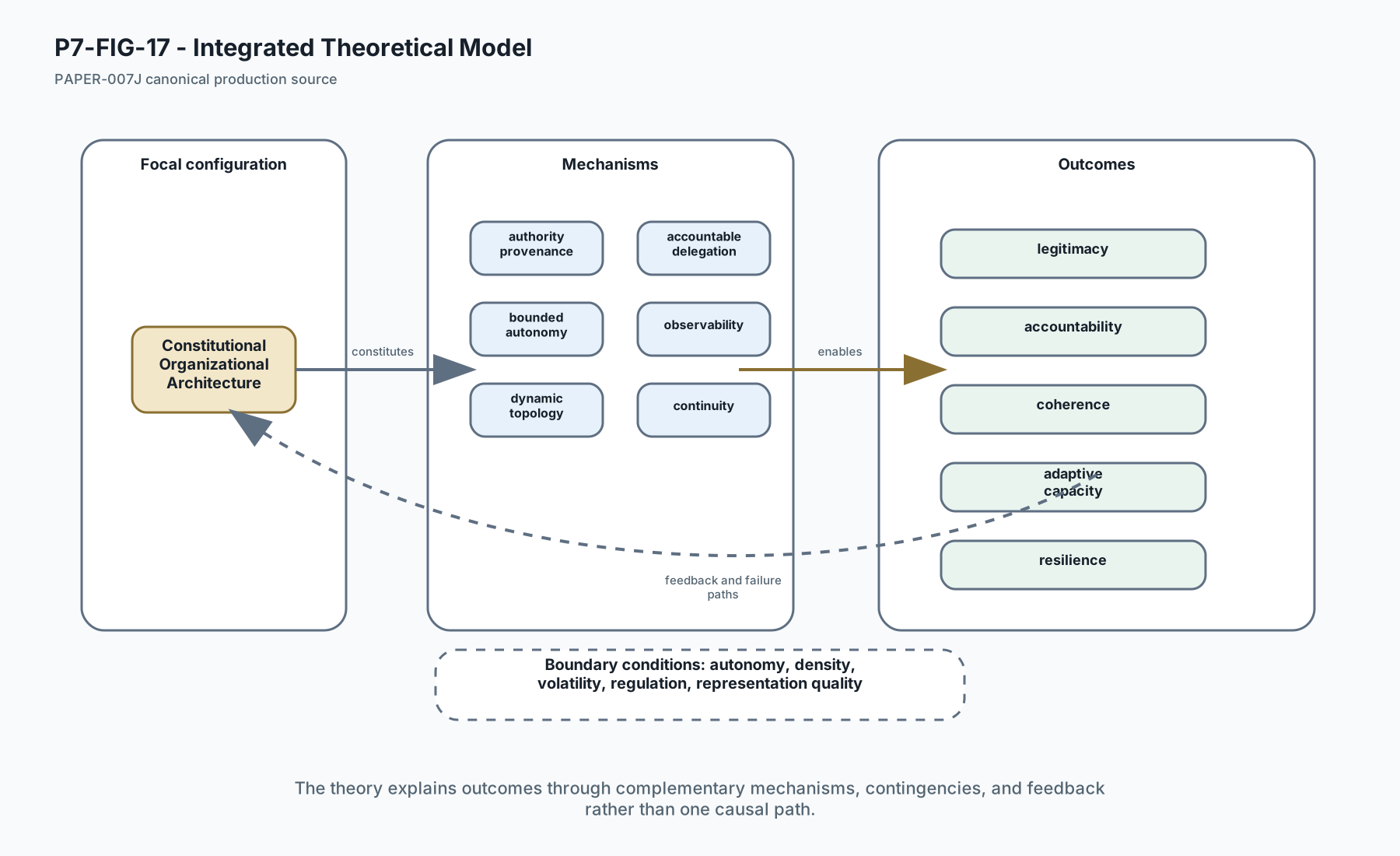
The theoretical model links Constitutional Organizational Architecture to legitimacy, accountability, organizational coherence, adaptive capacity, and constitutional resilience through the mechanisms described above. It also includes contingencies and adverse effects. The model is conceptual: it states theoretical expectations rather than empirical estimates.
Figure 5
Integrated Theoretical Model
7.1 Constitutive Configuration
The first proposition defines the focal construct. Constitutional Organizational Architecture is not present merely because an organization has policies, workflows, roles, and AI controls. It exists when constitutional clarity, authority architecture, role architecture, representation architecture, governance observability, adaptation architecture, constitutional evolution, and resilience and repair operate as a coherent configuration.
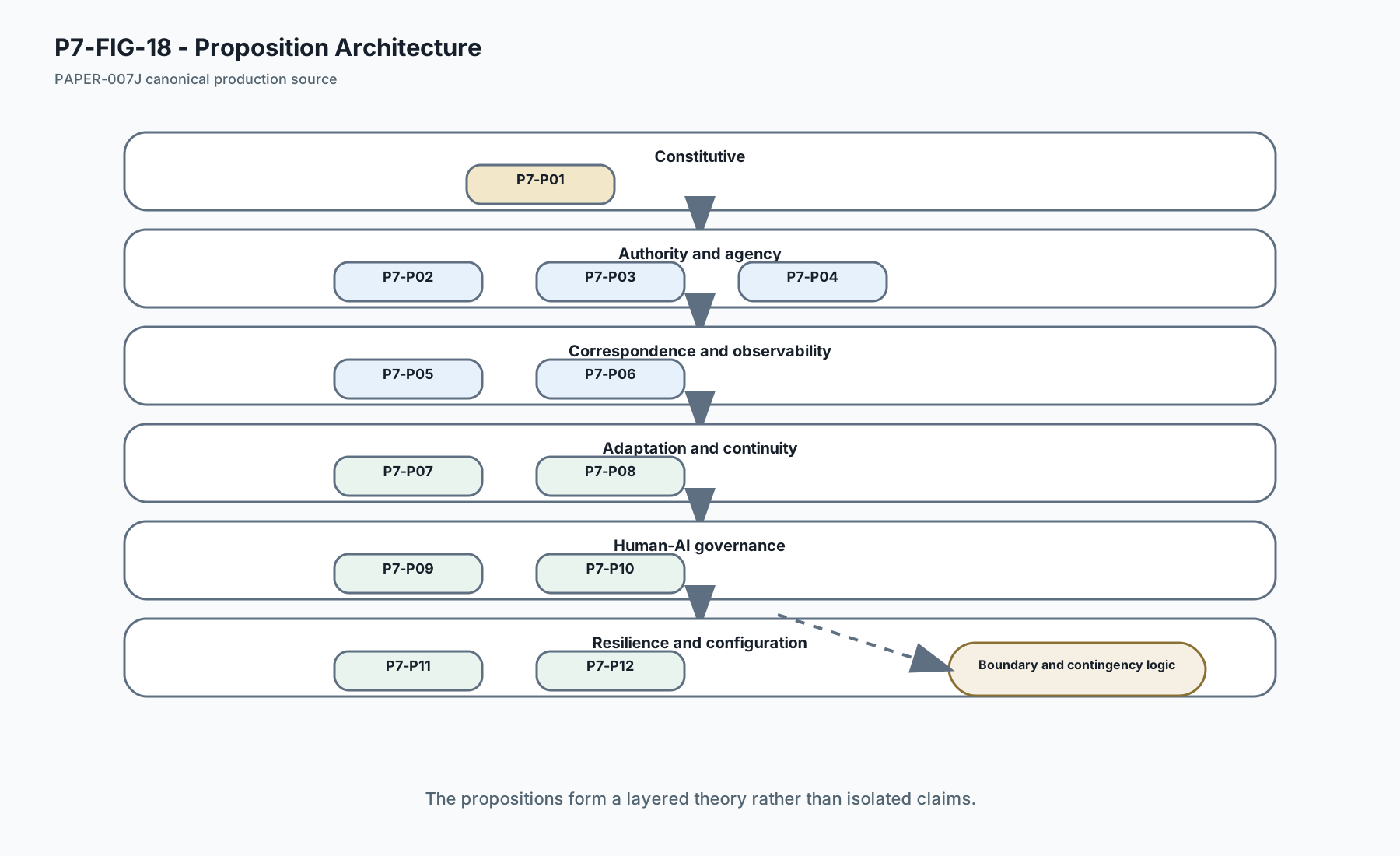
P7-P01. Organizations exhibit stronger Constitutional Organizational Architecture when constitutional foundation, authority architecture, role architecture, representation architecture, adaptation architecture, and resilience/repair architecture operate as a coherent configuration rather than as isolated controls.
7.2 Authority, Delegation, and Autonomy
Distributed human-AI action increases the need for authority provenance. When actors can trace decisions and actions to constitutional sources, jurisdictions, roles, delegations, and accountability anchors, organizational action is more likely to be experienced as legitimate and governable. This does not mean that provenance alone guarantees legitimacy. Conflicting sources, symbolic documentation, or contested authority can weaken the relationship.
P7-P02. In distributed human-AI action, stronger authority provenance is associated with greater perceived legitimacy and accountability when actors can trace action to accepted constitutional sources, jurisdictions, roles, delegations, and accountability anchors.
Accountable delegation explains how autonomy can be bounded. Delegated scope specifies what an actor may do. Attribution identifies where action is anchored. Supervision and revocation preserve governance capacity. Contestability allows affected actors to challenge action. These conditions are especially important for AI agents because technical execution can occur quickly and across organizational boundaries.
P7-P03. Accountable delegation increases safe bounded autonomy for human, unit, and AI actors when delegated scope, attribution, supervision, revocability, and contestability are present.
7.3 Correspondence, Observability, Compliance, and Learning
Organizational action becomes governable when representations preserve meaningful relationships. Purpose should relate to authority, authority to decisions, decisions to execution, execution to outcomes, and outcomes to learning. When these relationships are preserved, governance can observe whether action corresponds with constitutional commitments.
P7-P04. Representational correspondence among purpose, authority, decisions, execution, outcomes, and learning increases governance observability when representations preserve interpretable relationships rather than merely expanding the volume of trace data.
Governance observability then mediates the relationship between representational correspondence and compliance or learning. Observability is not a passive dashboard. It is the capacity to interpret whether action aligns with constitutional provisions, where deviations occurred, and what should be learned.
P7-P05. Governance observability mediates the relationship between representational correspondence and constitutional compliance and learning by enabling actors to interpret whether action aligns with constitutional commitments and where deviations require response.
7.4 Topology, Adaptation, and Continuity
Dynamic topology allows organizations to form, dissolve, and recombine roles, units, capabilities, and agent participation around changing demands. This can increase adaptive capacity, but only when interfaces, dependencies, authority boundaries, and accountability relationships remain explicit. Otherwise, topology changes may produce fragmentation.
P7-P06. Dynamic organizational topology increases adaptive capacity when interfaces, authority boundaries, dependencies, and accountability relationships remain explicit during recombination.
Constitutional continuity explains why adaptation requires stability. Organizations can adapt legitimately when they distinguish runtime reconfiguration from constitutional evolution and preserve identity, commitments, authority, and accountability across change. Continuity can, however, become rigidity when amendment pathways are too weak.
P7-P07. Constitutional continuity enables legitimate adaptation when organizations distinguish runtime reconfiguration from constitutional evolution and preserve identity, commitments, authority, and accountability across change.
7.5 Human-AI Governance Safeguards
As AI-agent participation becomes more consequential, meaningful human governance becomes a safeguard. The theory does not claim that human review always improves decisions. Rather, it argues that high-impact AI action requires humans or human-governed bodies with evidence access, intervention capacity, and authority to contest, override, or amend action when needed.
P7-P08. Meaningful human governance weakens the negative effects of high-impact AI-agent participation on legitimacy, accountability, and safety when human-governed bodies possess evidence access, interpretive competence, intervention authority, contestability, and practical capacity to act.
7.6 Resilience, Formalization, Agent Density, and Configuration
Constitutional architecture must handle failure. Authority, representation, adaptation, and agent failures are expected in complex organizations. Resilience depends on detection, containment, remedy, learning, and repair.
P7-P09. Constitutional resilience improves recovery from authority, representation, adaptation, and agent failures when detection, interpretation, containment, remedy, learning, and repair mechanisms operate as a feedback cycle.
Formalization is not unconditionally beneficial. Too little formalization weakens governability. Too much formalization creates rigidity, delay, and constitutional overload. The appropriate level varies with volatility, complexity, maturity, and regulation.
P7-P10. Constitutional formalization has an inverted-U relationship with adaptability: insufficient formalization undermines governability, while excessive formalization increases rigidity, delay, and constitutional overload.
Agent density increases the importance of authority provenance, governance observability, and meaningful human governance because attribution, supervision, and coordination become more complex as more AI agents participate in organizational work.
P7-P11. As AI-agent density, autonomy, and interdependence increase, the importance of authority provenance, governance observability, and meaningful human governance increases because attribution, supervision, and coordination become more complex.
Finally, the theory is configurational. Autonomy, accountability, observability, representational correspondence, and meaningful human governance reinforce one another. Isolated components may be insufficient.
P7-P12. Constitutional organizational architecture produces its strongest effects when autonomy, accountability, observability, representational correspondence, and meaningful human governance operate as a complementary configuration.
Figure 6
Proposition Architecture