
Conceptual Model
The core conceptual model begins with organizational intent. Intent becomes represented through strategies, priorities, decisions, policies, goals, constraints, AI prompts, governance rules, and planning artifacts. These intent representations interact with decision representations, execution representations, outcome representations, learning representations, memory representations, and AI-generated representations. Together, these artifacts form a representation network (Star and Griesemer, 1989; Ross et al., 2006; Lankhorst, 2017).
Organizational Correspondence is sustained when meaningful semantic and causal relationships among these representations are preserved. A decision remains connected to intent and evidence. Execution remains connected to decisions. Outcomes remain connected to execution. Learning updates memory. Memory informs future decisions. AI-generated representations remain traceable to intent, context, authority, and prior knowledge.
Cognitive Integrity emerges when these relationships are sustained across organizational cognition. It is not a direct output of a single mechanism. It is an emergent state associated with the maintained correspondence conditions of the representation network.
Figure 3
Core Conceptual Model
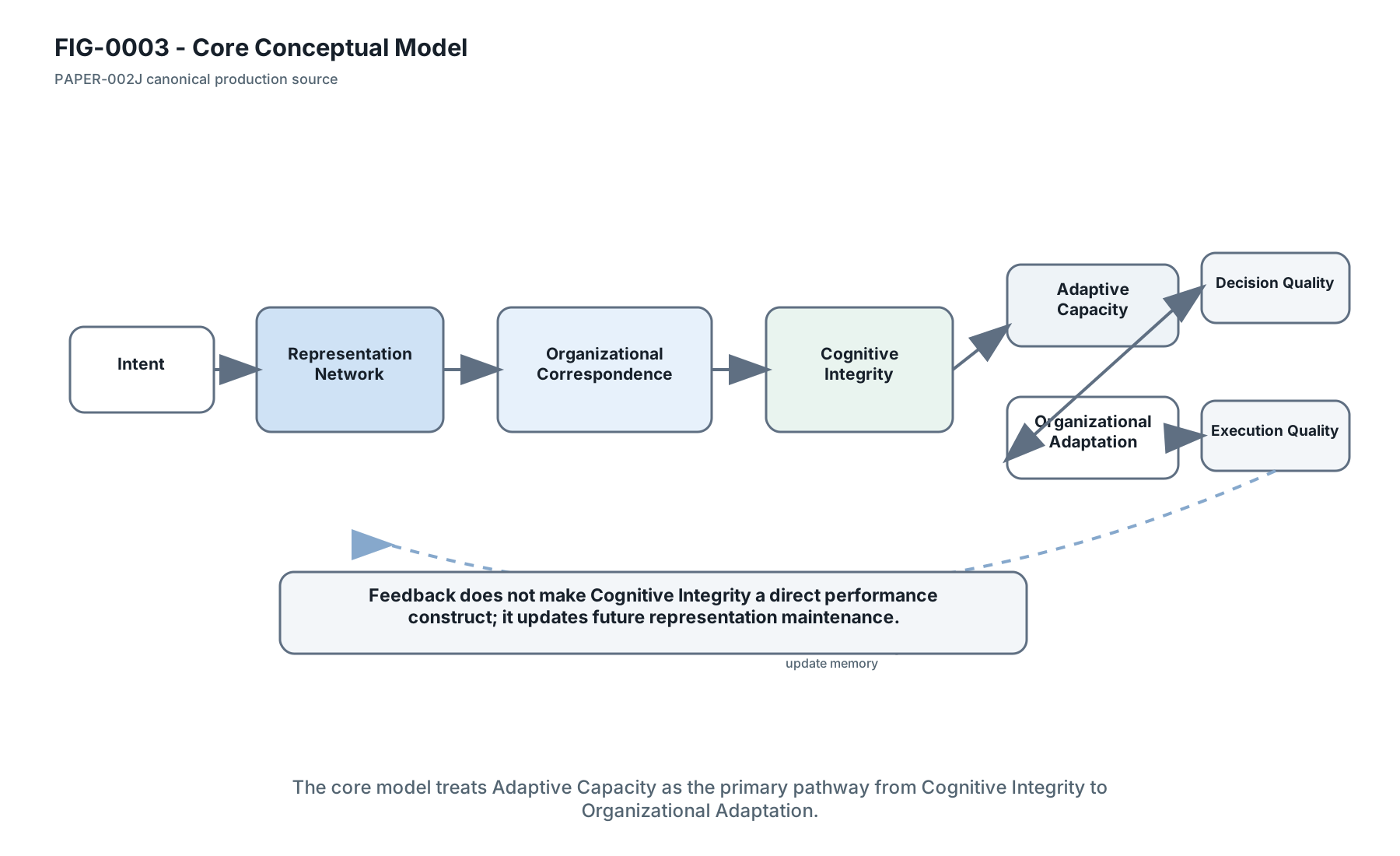
The model treats Adaptive Capacity as the primary pathway from Cognitive Integrity to Organizational Adaptation. This matters because Cognitive Integrity should not be claimed to directly produce performance. Markets, resources, regulation, leadership, technology, and timing also shape performance. Cognitive Integrity contributes by supporting coherent adaptation, decision quality, and execution quality.