
01 — Intent
Clarity begins with knowing what matters.
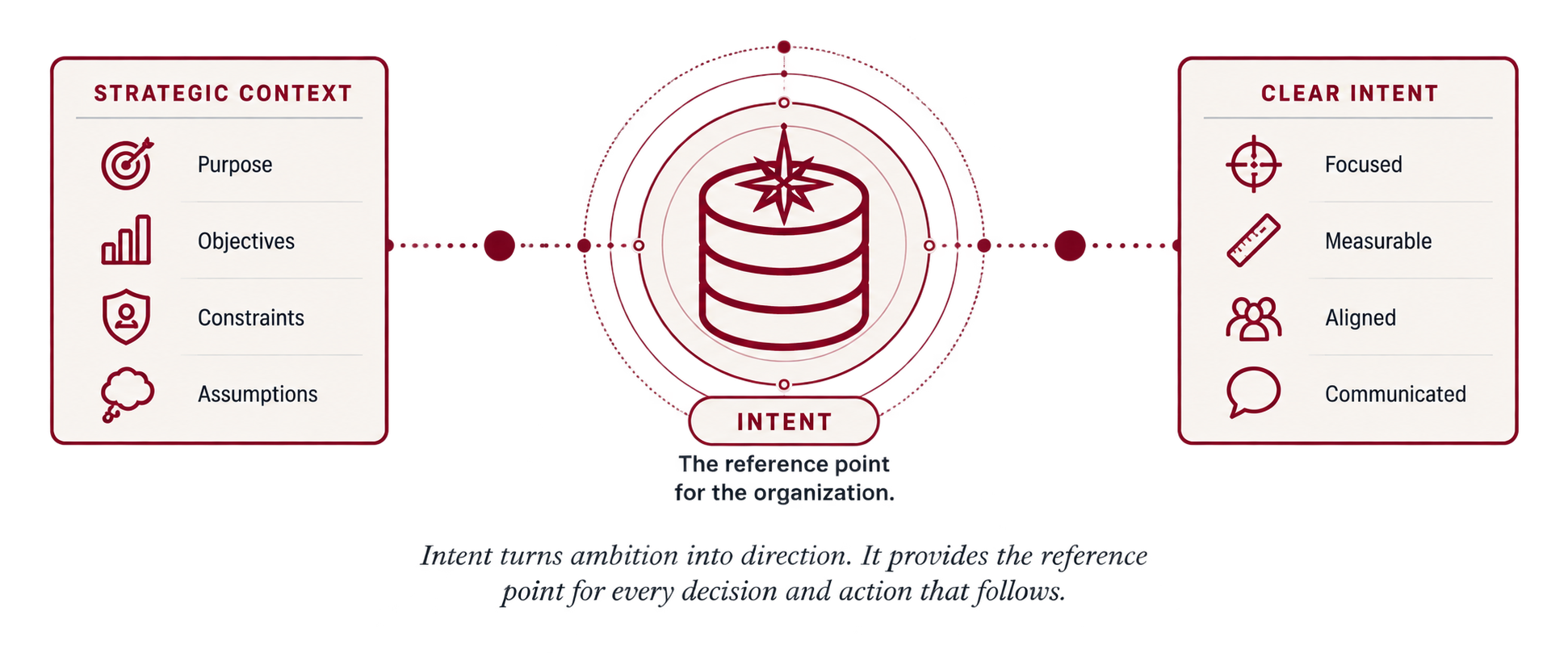
Intent is the reference point that connects strategy to decisions, execution and outcomes.
It defines the direction we are trying to create, the outcomes we seek, the boundaries within which we operate, and the assumptions that shape our view of the world.
When intent is explicit and shared, the entire organization can correspond to it. When it is vague or lost in translation, the organization drifts.
What we intend to create.
- Purpose
- Objectives
- Constraints
- Assumptions
- Focused
- Measurable
- Aligned
- Communicated
Figure 01 — Intent in the Loop
Why intent matters
Without explicit intent, organizations optimize activity instead of outcomes.
In the absence of a clear, shared intent, people and teams make locally rational choices that rarely add up to organizational coherence.
Intent provides the standard of reference for prioritization, trade-offs, and resource allocation. It is the north star that keeps the organization moving in the right direction—especially when conditions change.
The building blocks of intent
- 01
Purpose
Why we exist and the value we are here to create.
- 02
Objectives
The outcomes we intend to achieve.
- 03
Constraints
The boundaries within which we operate.
- 04
Assumptions
The beliefs about the world that shape our decisions.
The correspondence problem
Intent does not fail when it is written badly. It fails when the organization stops corresponding to it.
As intent moves through the organization, it can be distorted, misinterpreted, or disconnected from action.
The Operating Loop reveals where and why that happens—and how to prevent it.
Editorial Intent breakdown visual showing the failure modes below.
- 01
01 Intent
What we intend to create.
- 02
02 Knowledge
What we know about reality.
- 03
03 Authority
Who can decide and act.
- 04
04 Decision
What we choose to do.
- 05
05 Execution
What we actually do.
- 06
06 Evidence
What actually happened.
- 07
07 Learning
What should change next.
Intent in an AI-native organization
AI makes explicit intent more important, not less.
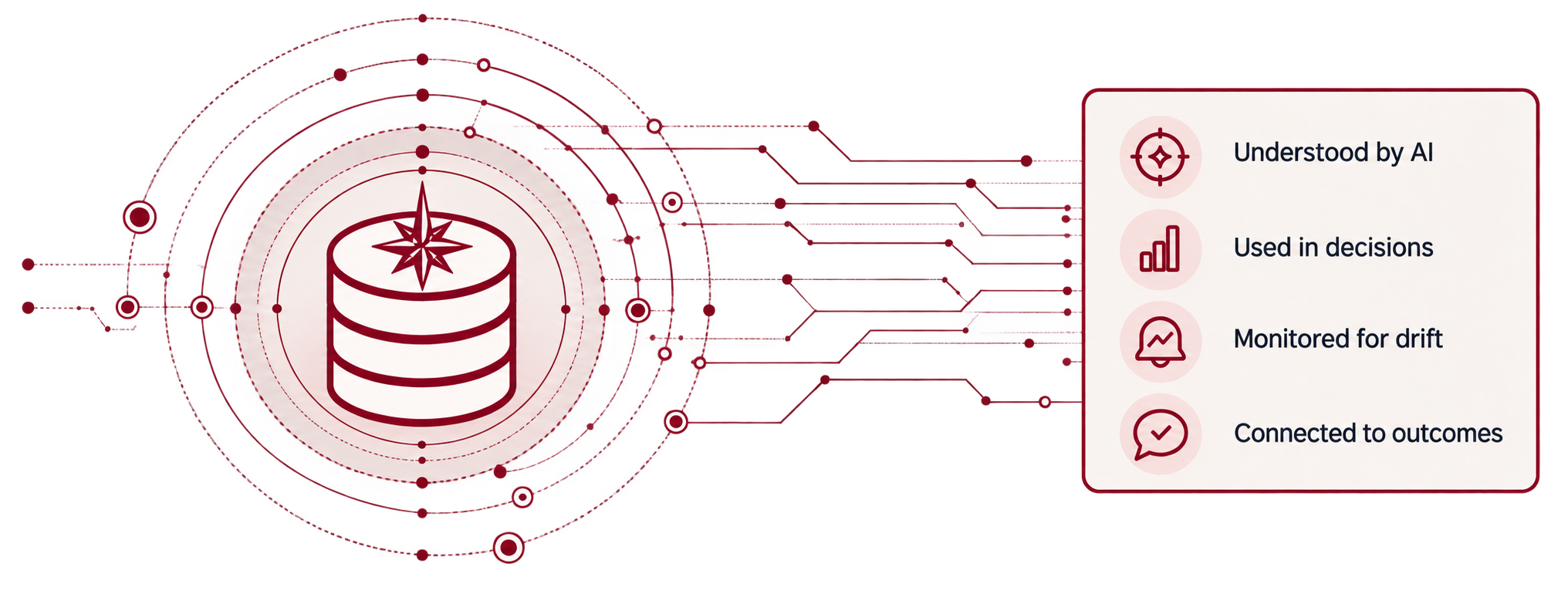
AI systems and agents cannot reliably infer organizational purpose from disconnected data, documents, or conversations. They need explicit intent—structured, accessible, and continuously connected to context.
When intent is machine-readable and well-governed, AI can help the organization stay aligned, detect drift, and act in service of what matters.
- Understood by AI
- Used in decisions
- Monitored for drift
- Connected to outcomes
What good intent looks like
Weak intent
“Improve customer experience.”
- Vague and open to interpretation
- No clear outcome or measure of success
- Unclear priorities and trade-offs
- Hard to translate into action
Operational intent
“Delight customers at every interaction and grow lifetime value by 20% within 18 months, while reducing support costs by 15%, within our privacy and security constraints.”
- Clear purpose and measurable outcomes
- Bounded by constraints
- Prioritized and actionable
- Aligned across the organization
Intent is not a document. It is a living reference that guides the entire organization.
Intent establishes what matters.
But intent alone is insufficient. The organization must know enough about its situation to act intelligently.