02 — Knowledge
Acting intelligently starts with knowing reality.
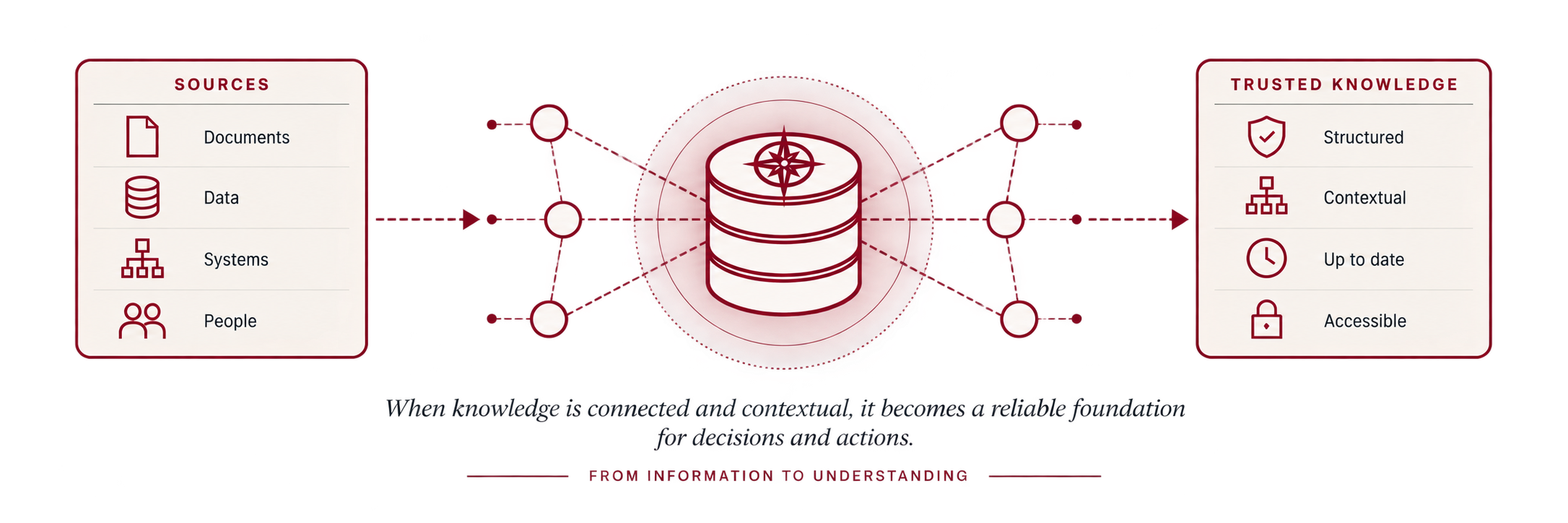
Knowledge is the organization’s shared understanding of reality—its context, data, insights and experience.
When knowledge is incomplete, outdated, or siloed, decisions become guesses. When it is connected, current and usable, the organization can respond with intelligence.
Knowledge gives intent substance and turns information into understanding.
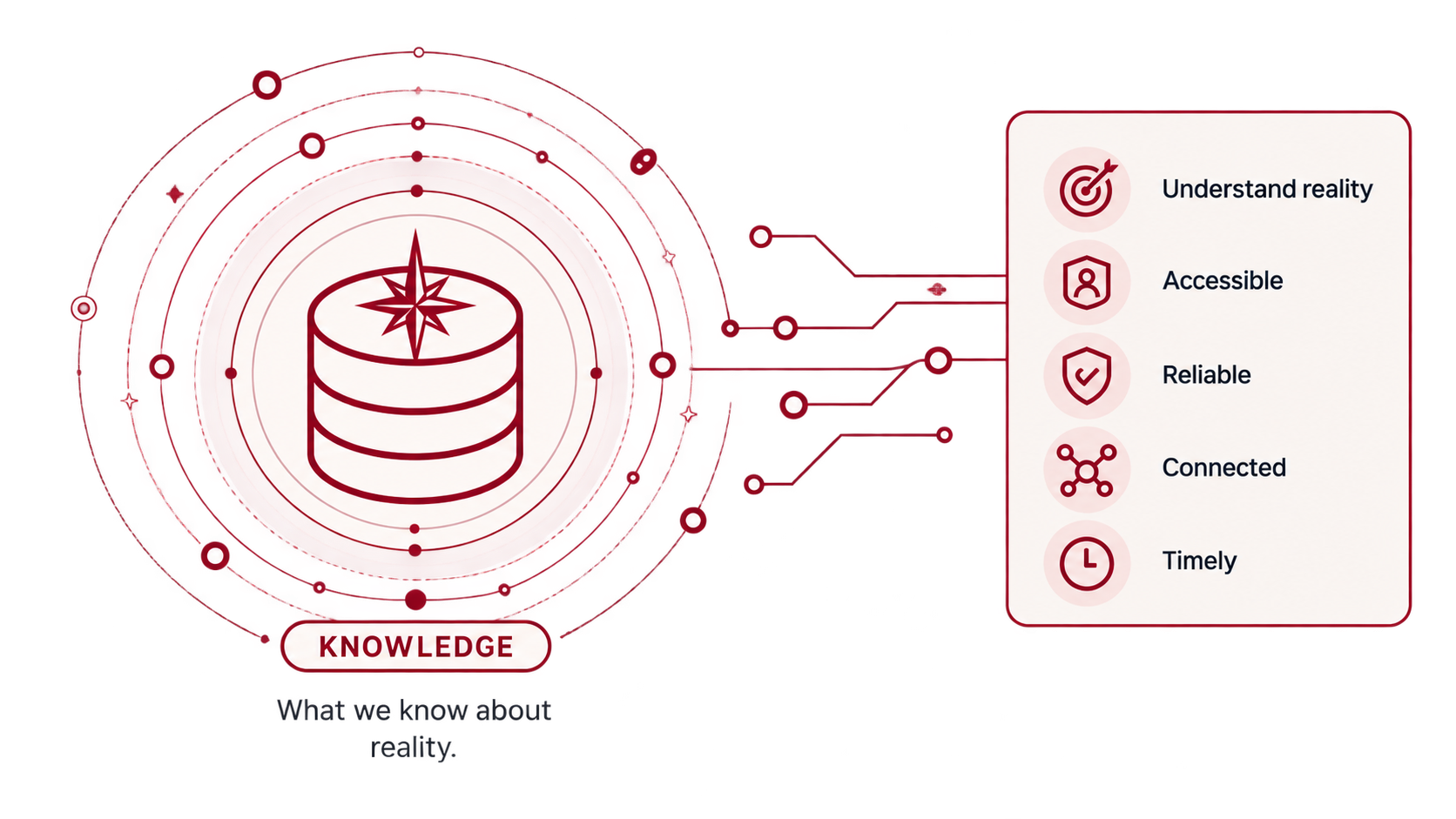
What we know about reality.
- Understand reality
- Accessible
- Reliable
- Connected
- Timely
Figure 02 — Knowledge in the Loop
Why knowledge matters
Poor knowledge doesn’t just slow organizations down—it leads them in the wrong direction.
Organizations rarely fail because they lack data. They fail because they lack usable knowledge.
Knowledge breaks down when it is trapped in silos, scattered across tools, owned by individuals, or not trusted.
An AI-native organization treats knowledge as a shared, living asset—continuously captured, connected and improved.
Forms of organizational knowledge
- 01
Data
Raw facts and observations from internal and external sources.
- 02
Information
Organized data with context and meaning.
- 03
Insights
Patterns and understanding derived from information.
- 04
Experience
What the organization has learned over time.
- 05
Wisdom
Applied judgment that improves future outcomes.
The knowledge breakdown
When knowledge does not correspond across the organization, everything that follows becomes fragile.
Breakdowns in knowledge create blind spots, duplicated efforts, slow decisions and costly failures.
The Operating Loop exposes these breaks so they can be seen and repaired.
How knowledge breaks down
- 01
Fragmented
Scattered across teams, systems and documents.
- 02
Outdated
Not refreshed as reality changes.
- 03
Siloed
Locked within functions or individuals.
- 04
Untrusted
Doubted or inconsistent in quality.
- 05
Unused
Difficult to find, access or apply in decisions.
Knowledge in an AI-native organization
AI amplifies both the power of knowledge and the cost of ignorance.
AI systems can process massive amounts of information, but they cannot fix poor knowledge.
They need trusted, connected, well-governed knowledge to generate reliable insights and support action.
The goal is not more data. The goal is better knowledge.
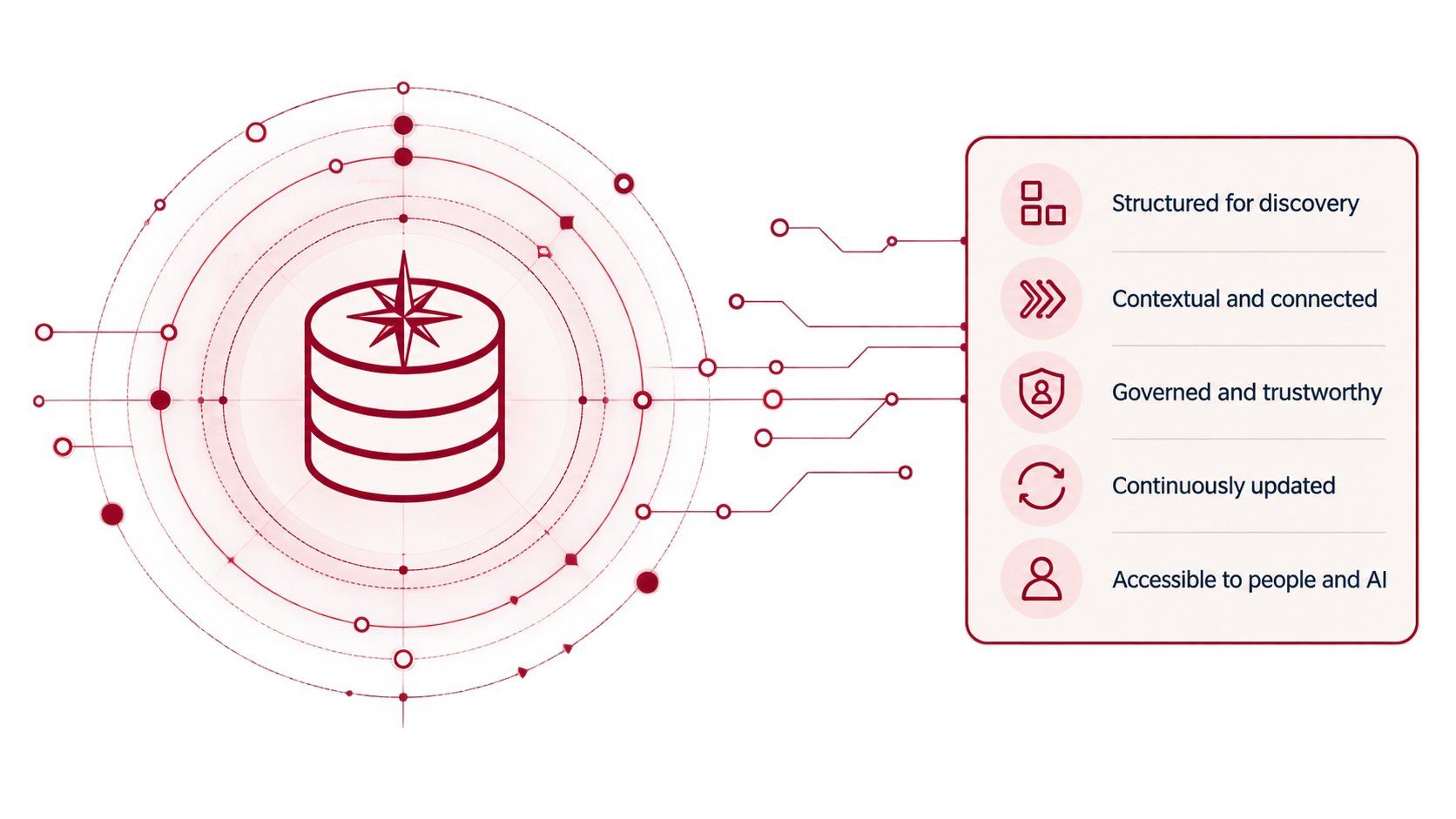
- Structured for discovery
- Contextual and connected
- Governed and trustworthy
- Continuously updated
- Accessible to people and AI
Knowledge turns intent into informed action.
When the organization understands reality, the right people can decide with confidence.