
Paper overview

Knowledge, State, Governance, Projection, and Correspondence

The model distinguishes organizational knowledge from organizational state. Knowledge is governed meaningful understanding that can guide interpretation, decision, action, learning, or adaptation. State is the temporally situated condition of commitments, work, relationships, evidence, and outcomes. Memory retains prior knowledge and experience; it is not automatically current. Execution enacts authorized intent; it is not equivalent to workflow automation. Evidence grounds claims but remains partial and interpreted.

Figure 3 presents the knowledge and organizational-state lifecycle. Candidate knowledge is created, interpreted, admitted, represented, retained, retrieved, projected, used in decisions, enacted through execution, evidenced through outcomes, revised through learning, and archived or superseded through governance.

Figure 3

Knowledge and Organizational-State Lifecycle
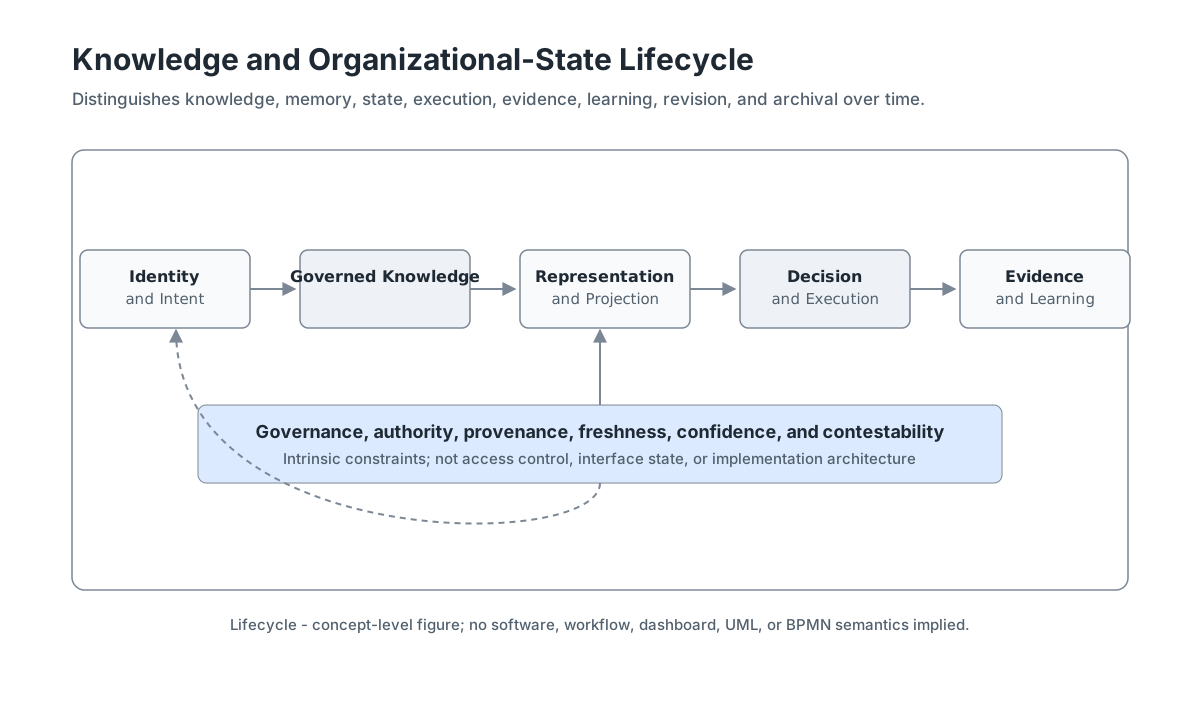
Knowledge and Organizational-State Lifecycle. The figure presents a left-to-right conceptual sequence of identity and intent, governed knowledge, representation and projection, decision and execution, and evidence and learning. A governance layer connects authority, provenance, freshness, confidence, and contestability across the sequence. Dashed feedback indicates learning and revision over time. Color is not required for interpretation.
Figure 3. Knowledge and Organizational-State Lifecycle. Distinguishes knowledge, memory, state, execution, evidence, learning, revision, and archival over time. The figure is conceptual and does not specify software architecture, workflow automation, user-interface behavior, or empirical findings.

Governance is intrinsic to the OKK. It determines admission, authorization, stewardship, contestation, revision, archival, and AI participation boundaries. Authority is not technical permission. It is the legitimate organizational capacity to bind, admit, revise, reject, or act on knowledge, decisions, representations, and projections. Figure 4 shows governance, authority, and provenance as a unified model.

Figure 4

Governance, Authority, and Provenance Model
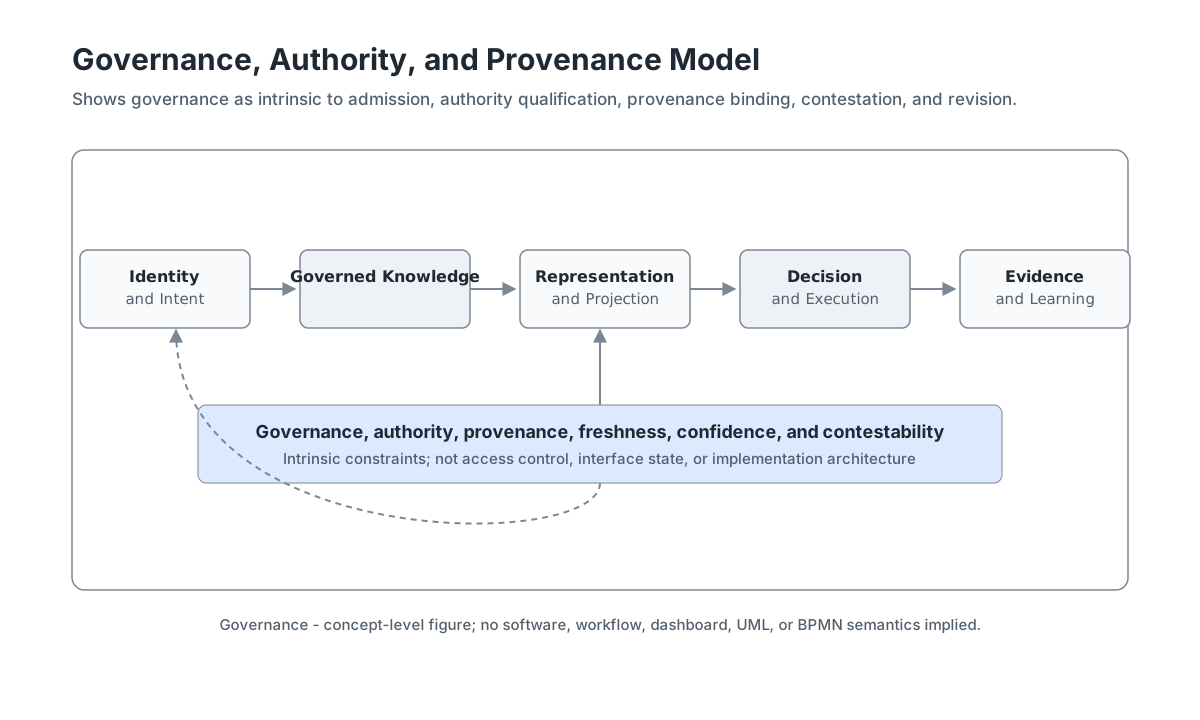
Governance, Authority, and Provenance Model. The figure presents a left-to-right conceptual sequence of identity and intent, governed knowledge, representation and projection, decision and execution, and evidence and learning. A governance layer connects authority, provenance, freshness, confidence, and contestability across the sequence. Dashed feedback indicates learning and revision over time. Color is not required for interpretation.
Figure 4. Governance, Authority, and Provenance Model. Shows governance as intrinsic to admission, authority qualification, provenance binding, contestation, and revision. The figure is conceptual and does not specify software architecture, workflow automation, user-interface behavior, or empirical findings.

Projection is the context-specific expression of governed knowledge for an actor, decision, work context, or AI-mediated interaction. Projection enables representational plurality without fragmentation when source, scope, authority, freshness, confidence, and contestability are preserved. Figure 5 shows this logic.

Figure 5

Projection and Representational Plurality Model
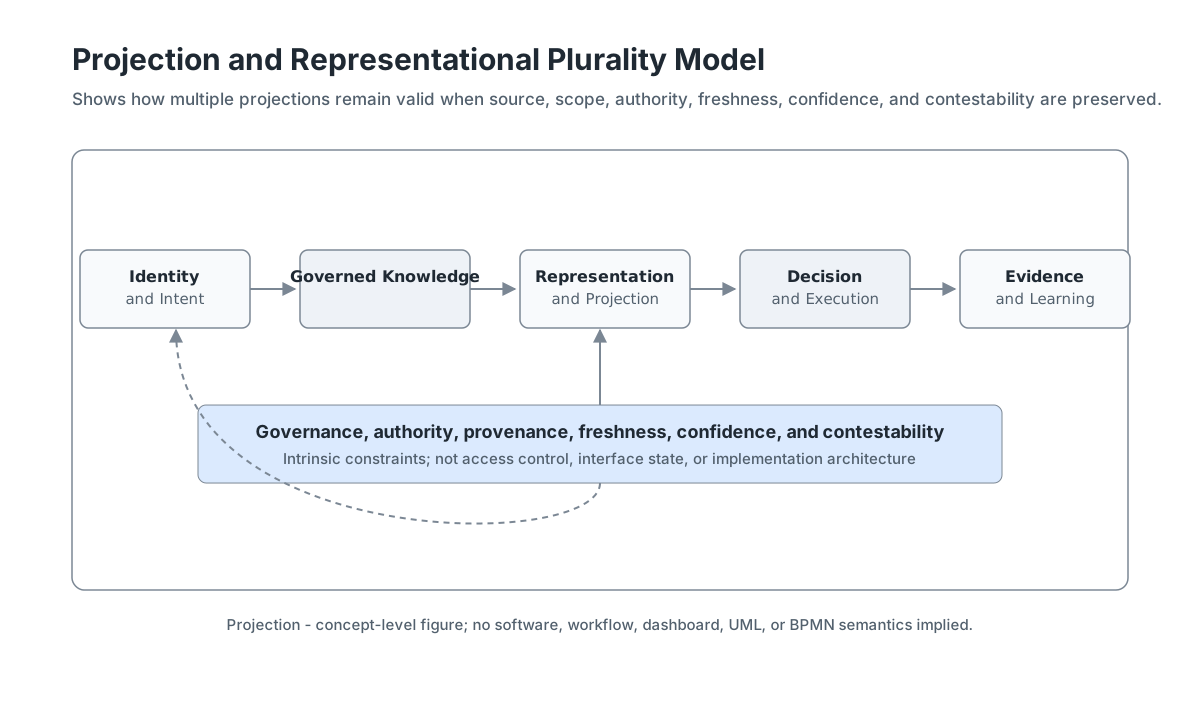
Projection and Representational Plurality Model. The figure presents a left-to-right conceptual sequence of identity and intent, governed knowledge, representation and projection, decision and execution, and evidence and learning. A governance layer connects authority, provenance, freshness, confidence, and contestability across the sequence. Dashed feedback indicates learning and revision over time. Color is not required for interpretation.
Figure 5. Projection and Representational Plurality Model. Shows how multiple projections remain valid when source, scope, authority, freshness, confidence, and contestability are preserved. The figure is conceptual and does not specify software architecture, workflow automation, user-interface behavior, or empirical findings.

The OKK evolves over time. It preserves identity without freezing knowledge, and it allows revision without uncontrolled drift. Figure 6 summarizes temporal evolution through current, contested, superseded, archived, and revised states. Figure 7 clarifies actor participation: executives, employees, AI agents, autonomous workflows, software systems, and governance mechanisms interact with organizational knowledge under different authority boundaries.

Figure 6

Temporal Evolution of the Kernel
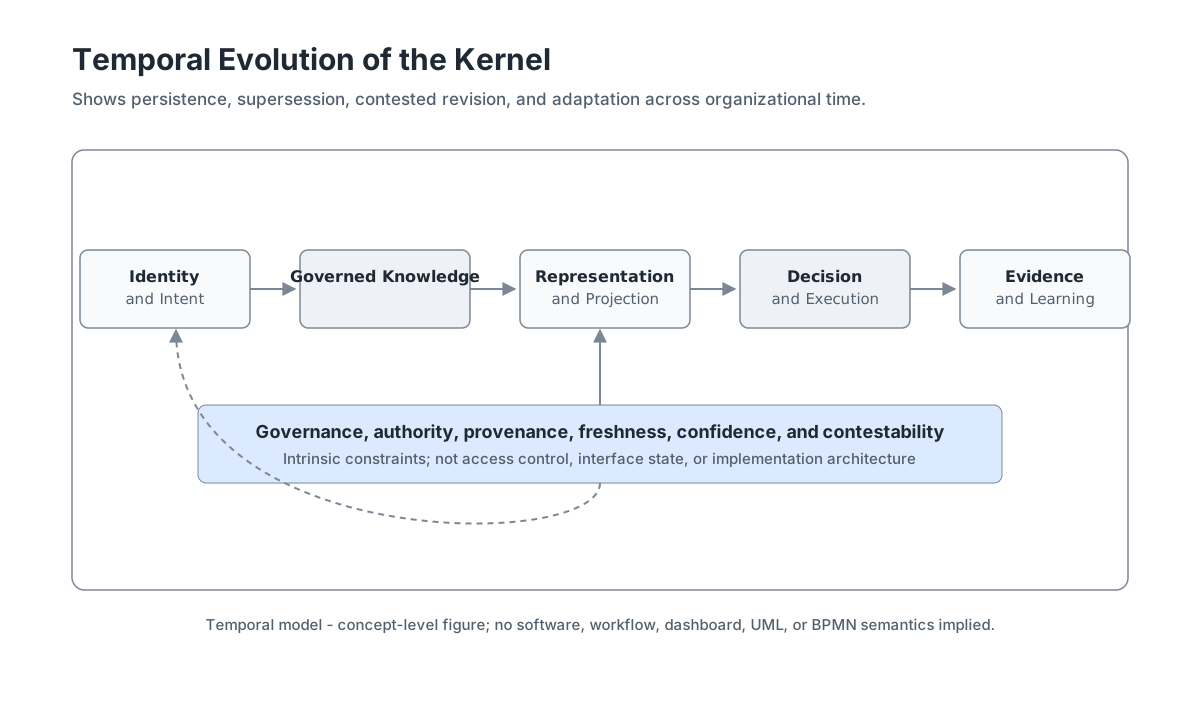
Temporal Evolution of the Kernel. The figure presents a left-to-right conceptual sequence of identity and intent, governed knowledge, representation and projection, decision and execution, and evidence and learning. A governance layer connects authority, provenance, freshness, confidence, and contestability across the sequence. Dashed feedback indicates learning and revision over time. Color is not required for interpretation.
Figure 6. Temporal Evolution of the Kernel. Shows persistence, supersession, contested revision, and adaptation across organizational time. The figure is conceptual and does not specify software architecture, workflow automation, user-interface behavior, or empirical findings.

Figure 7

Human, AI-Agent, and Software Interaction Model
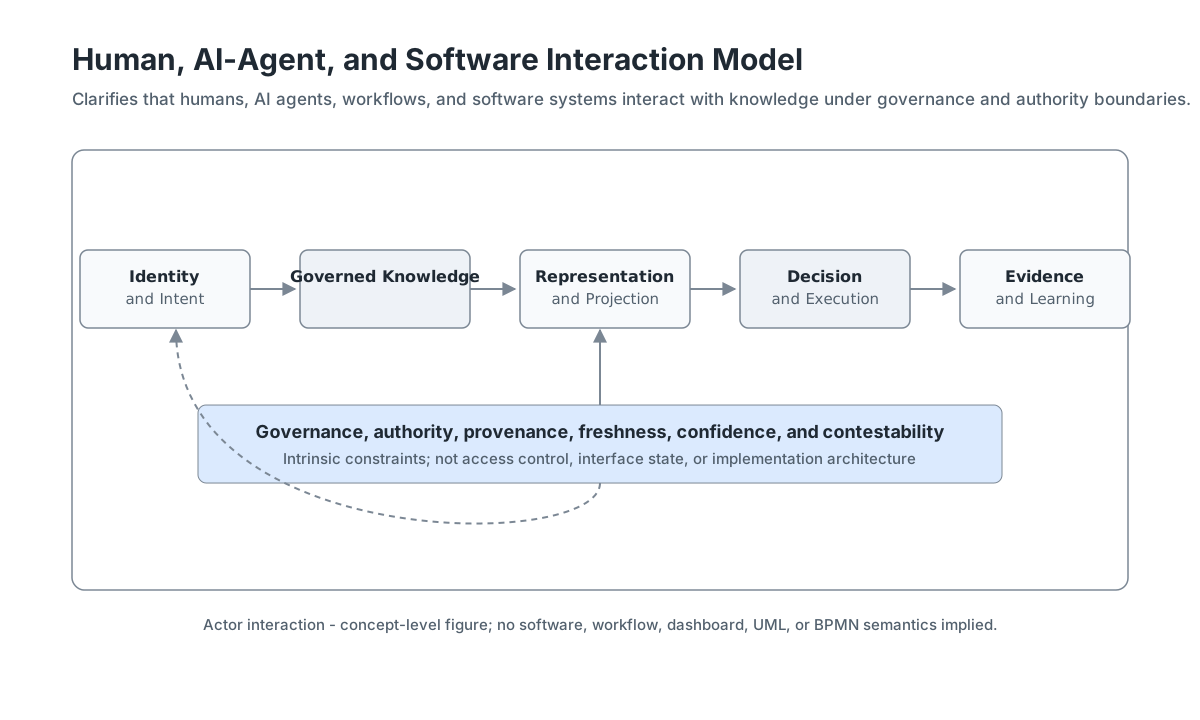
Human, AI-Agent, and Software Interaction Model. The figure presents a left-to-right conceptual sequence of identity and intent, governed knowledge, representation and projection, decision and execution, and evidence and learning. A governance layer connects authority, provenance, freshness, confidence, and contestability across the sequence. Dashed feedback indicates learning and revision over time. Color is not required for interpretation.
Figure 7. Human, AI-Agent, and Software Interaction Model. Clarifies that humans, AI agents, workflows, and software systems interact with knowledge under governance and authority boundaries. The figure is conceptual and does not specify software architecture, workflow automation, user-interface behavior, or empirical findings.

Correspondence preservation is the central mechanism linking the OKK to the broader Correspondia research program. Correspondence is not mere consistency, synchronization, or link maintenance. It is the preservation of meaningful relationships among representations and the organizational reality they express. Figure 8 shows how source grounding, traceability, projection fidelity, governance review, and evidence feedback preserve correspondence.

Figure 8

Correspondence-Preservation Mechanism
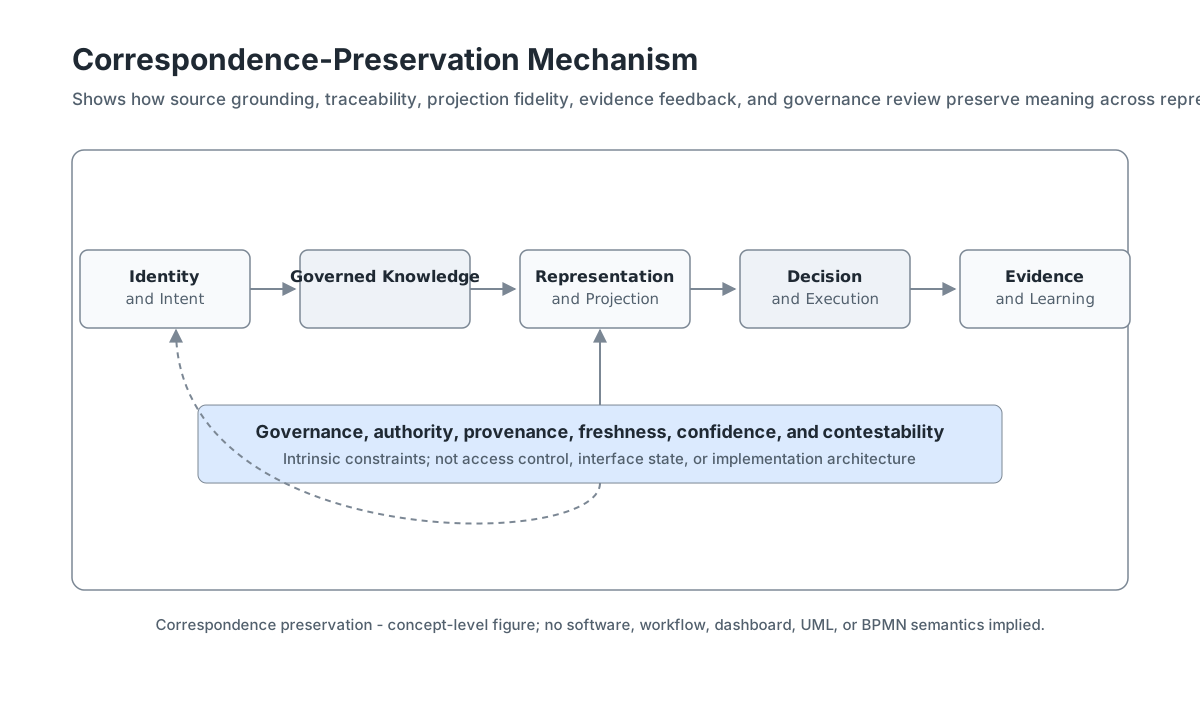
Correspondence-Preservation Mechanism. The figure presents a left-to-right conceptual sequence of identity and intent, governed knowledge, representation and projection, decision and execution, and evidence and learning. A governance layer connects authority, provenance, freshness, confidence, and contestability across the sequence. Dashed feedback indicates learning and revision over time. Color is not required for interpretation.
Figure 8. Correspondence-Preservation Mechanism. Shows how source grounding, traceability, projection fidelity, evidence feedback, and governance review preserve meaning across representations. The figure is conceptual and does not specify software architecture, workflow automation, user-interface behavior, or empirical findings.

Table 5 states the boundary conditions.

Table 5. Boundary Conditions

BoundaryIncludedExcluded
Representational pluralityMultiple projections and artifacts require correspondence.Single static repositories without projection need.
Governance relevanceAuthority and legitimacy affect knowledge use.Purely personal memory or informal notes.
AI participationAI retrieves, synthesizes, projects, or recommends.Contexts without AI-mediated transformation.
Knowledge intensityDecisions depend on interpretation, evidence, and revision.Simple transactional recordkeeping alone.